
Pickleball Drills
23 free pickleball drills with step-by-step instructions, timing, and reps. Filter by level and skill, from beginner dinking to advanced Erne footwork.
Beginner pickleball drills (7)
Build the dink, serve, return, and kitchen-line footwork that every rally starts from.
Read the 25 best beginner drills guide →Intermediate pickleball drills (10)
Own the transition zone: third shot drops, resets, speed-ups, and crosscourt dink battles.
Master the third shot drop →Advanced pickleball drills (6)
Pressure drills for Ernes, ATPs, poaching, stacking transitions, and counter-attacking.
See 21 advanced drills →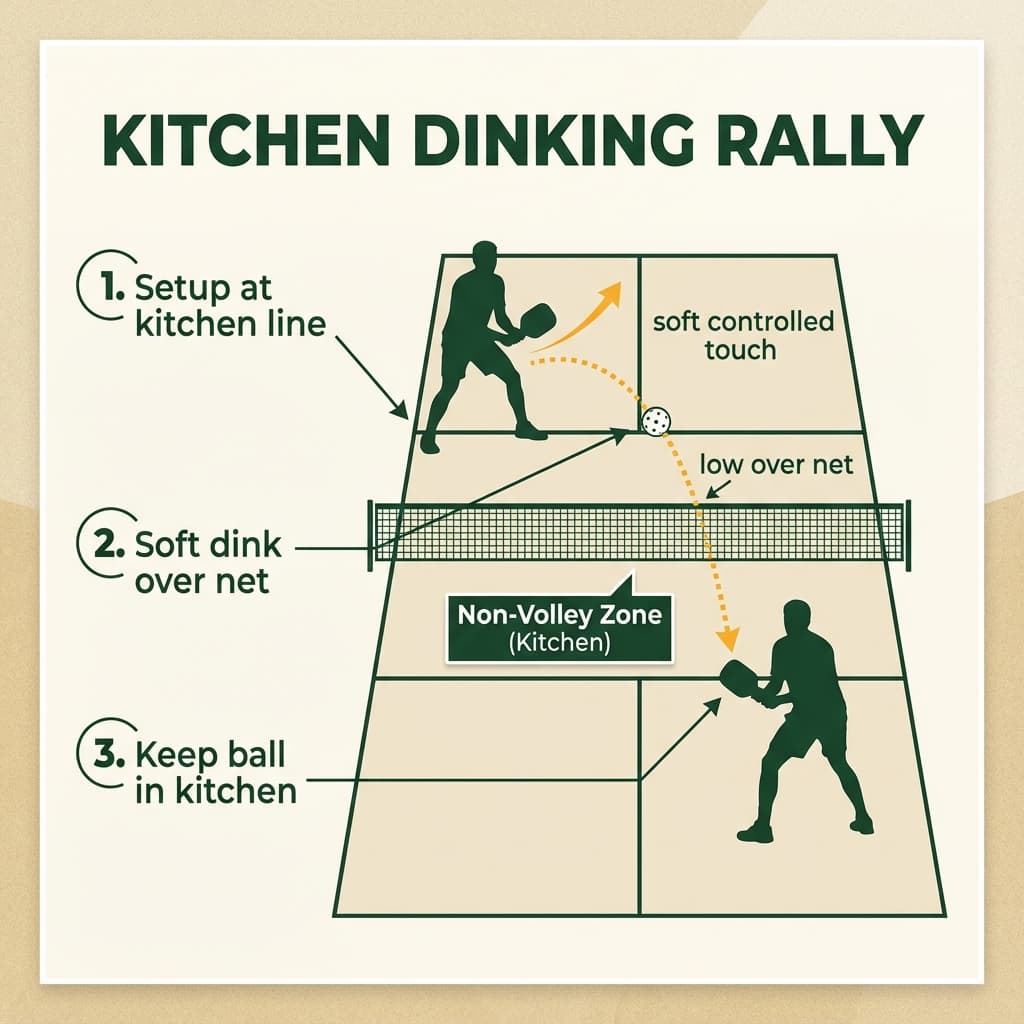
Soft Hands Dink Ladder
Start in the kitchen and alternate forehand/backhand dinks to a ladder of targets. Keep soft hands, stable paddle face, and calm feet.
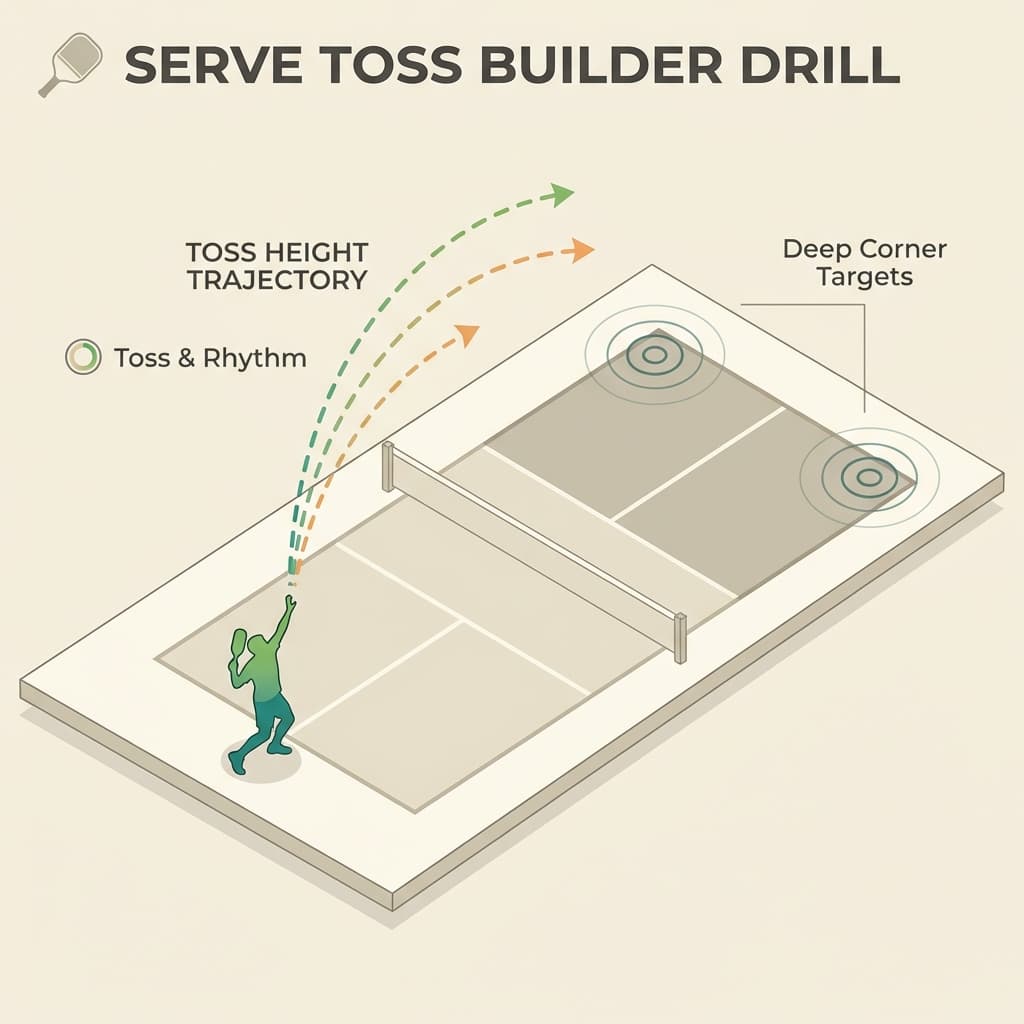
Serve Toss Builder
Shadow 10 serves with perfect toss height, then hit 20 controlled serves to deep corners. Smooth weight transfer and full follow-through.
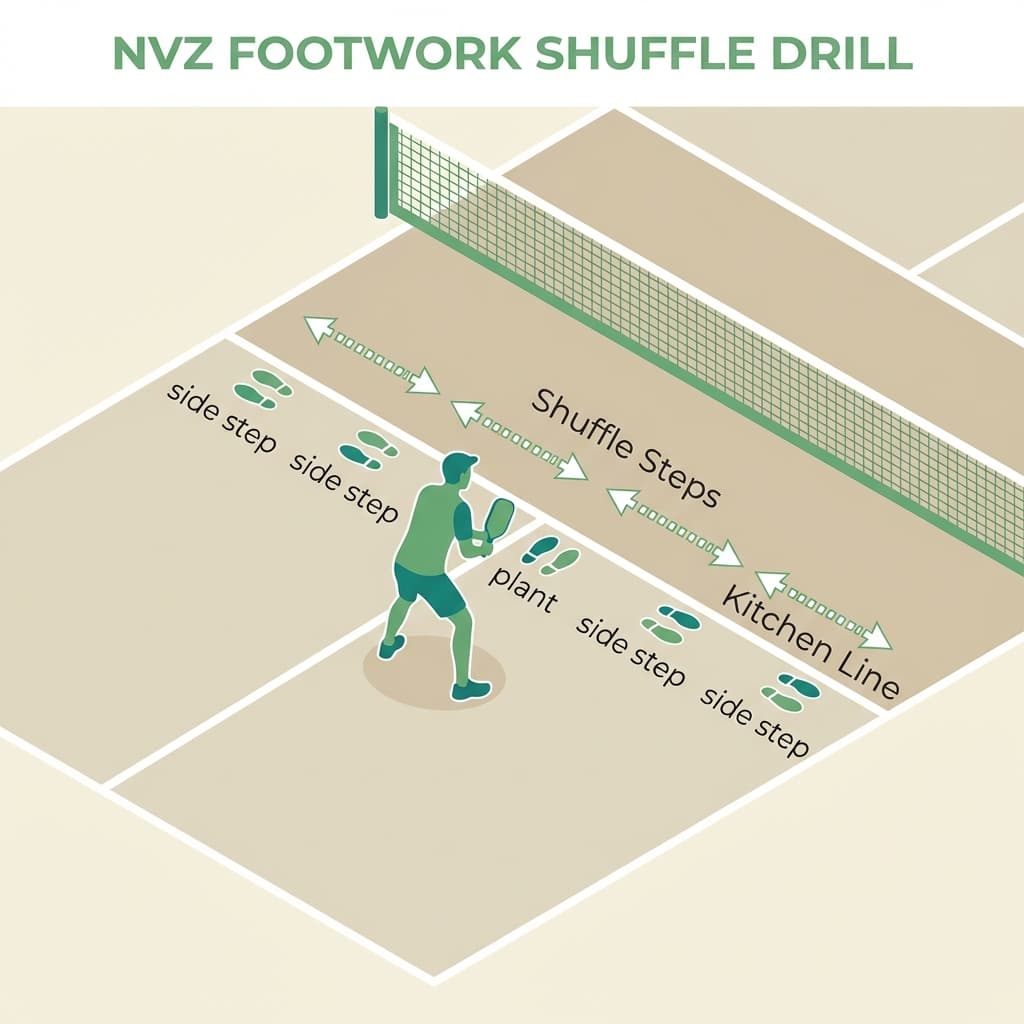
NVZ Footwork Shuffle
Shadow step along the kitchen line, then add short dinks while moving. Paddle up, balanced recovery after every contact.
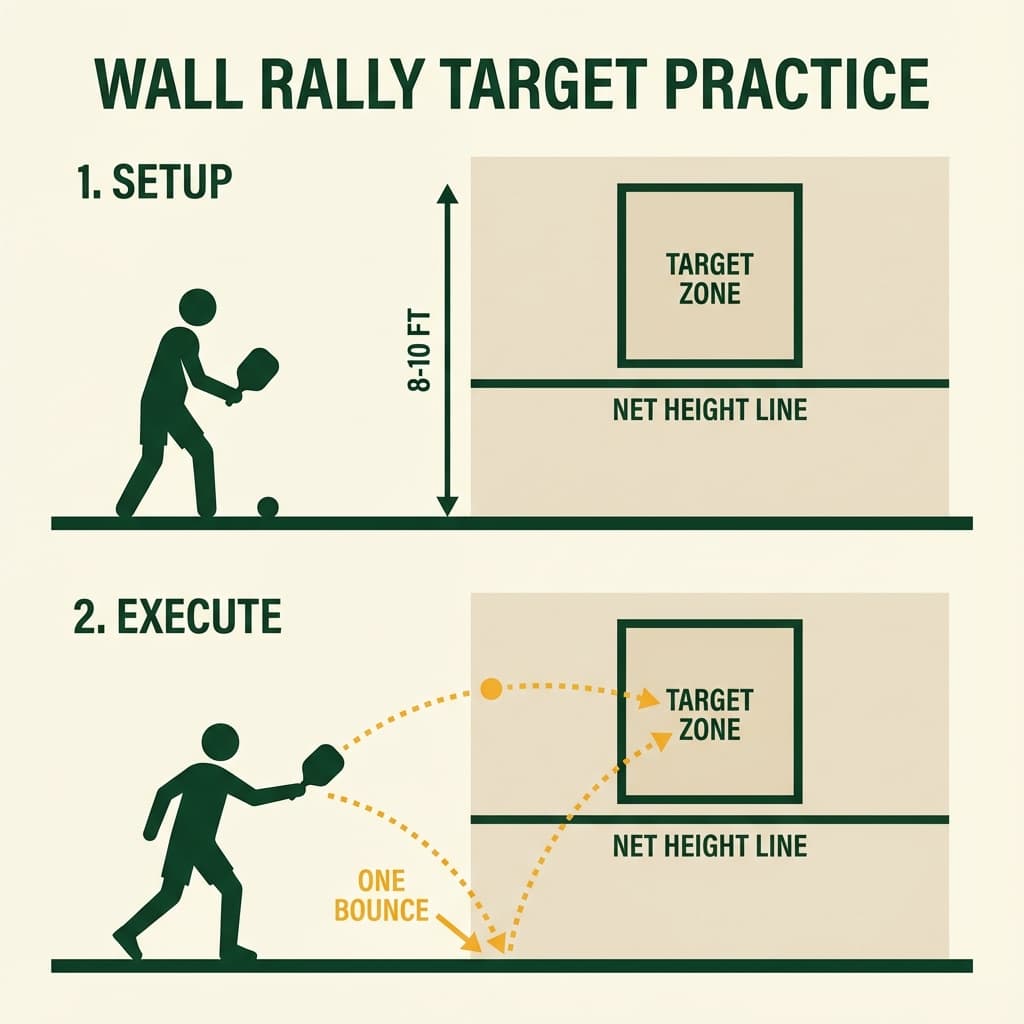
Wall Rally Consistency
Build hand-eye coordination and paddle control by rallying against a wall. Focus on consistent contact point and smooth strokes.
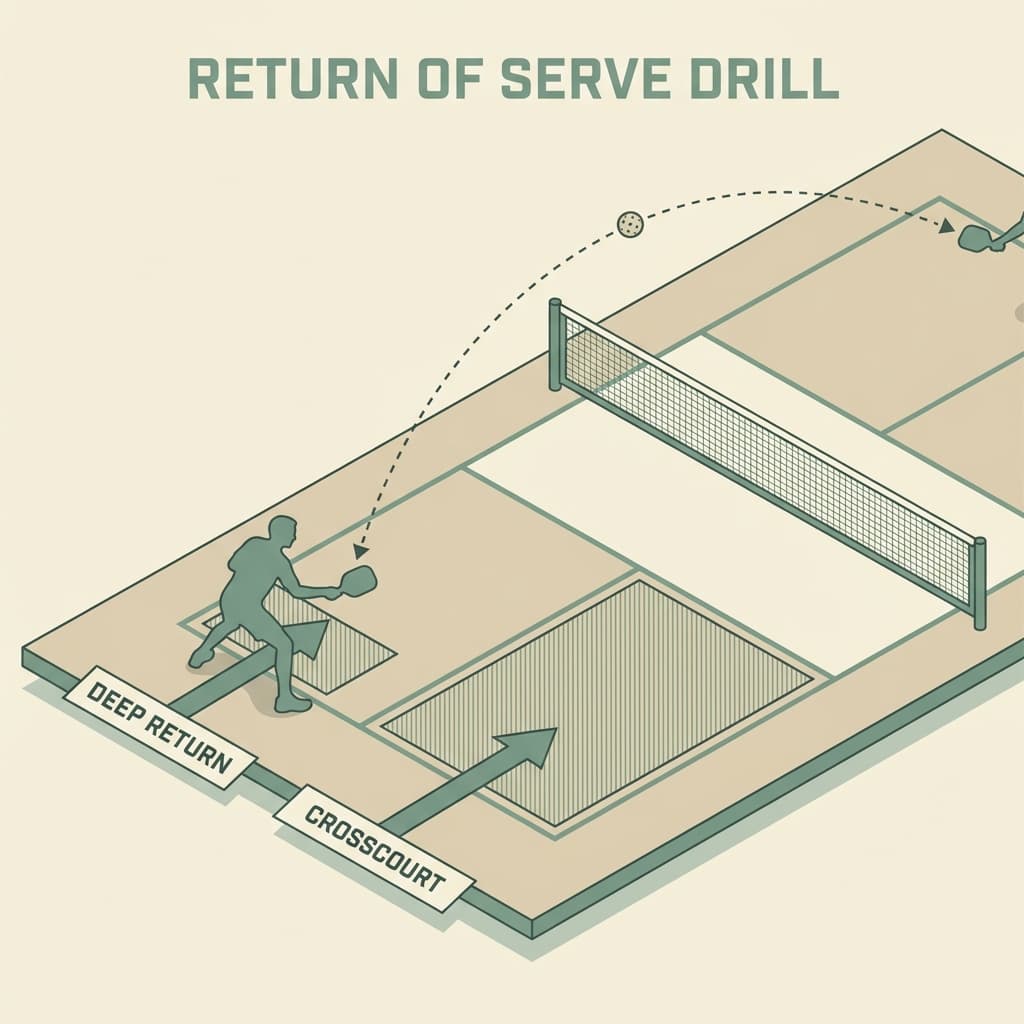
Return of Serve Practice
Master the return of serve with deep, controlled shots. Focus on getting the ball back deep to neutralize the server's advantage.
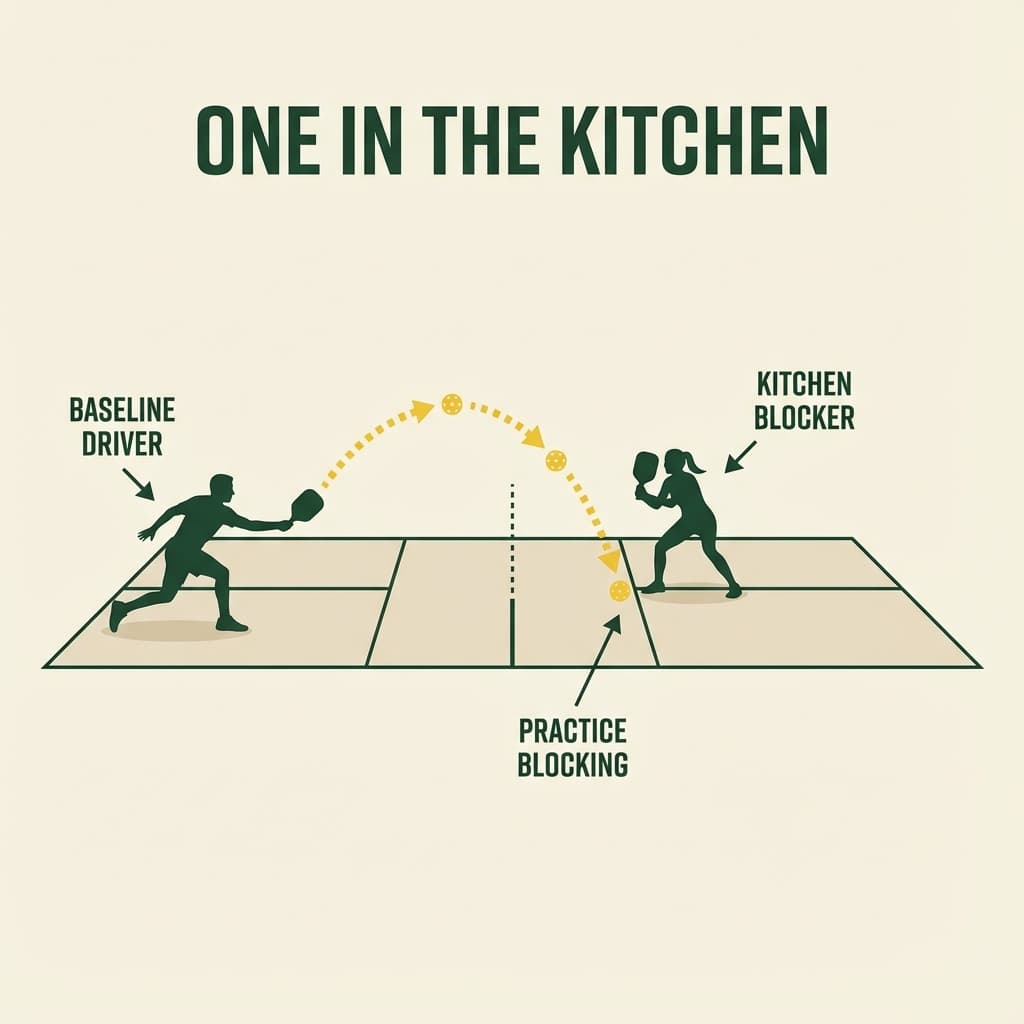
Kitchen Line Positioning
Learn proper non-volley zone positioning and ready stance. Build muscle memory for the most important position in pickleball.
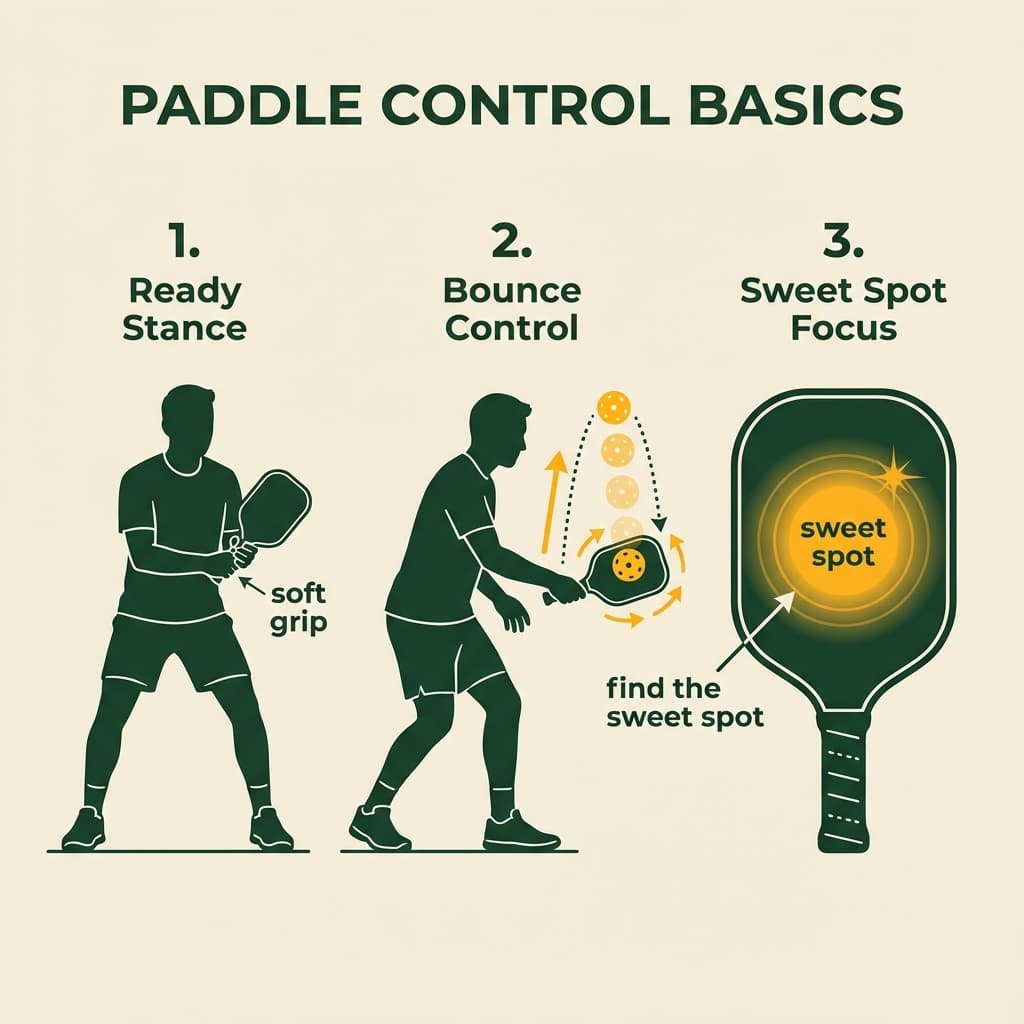
Paddle Control Drills
Develop fine paddle control with ball taps, bounces, and edge work. Essential foundation for all pickleball shots.
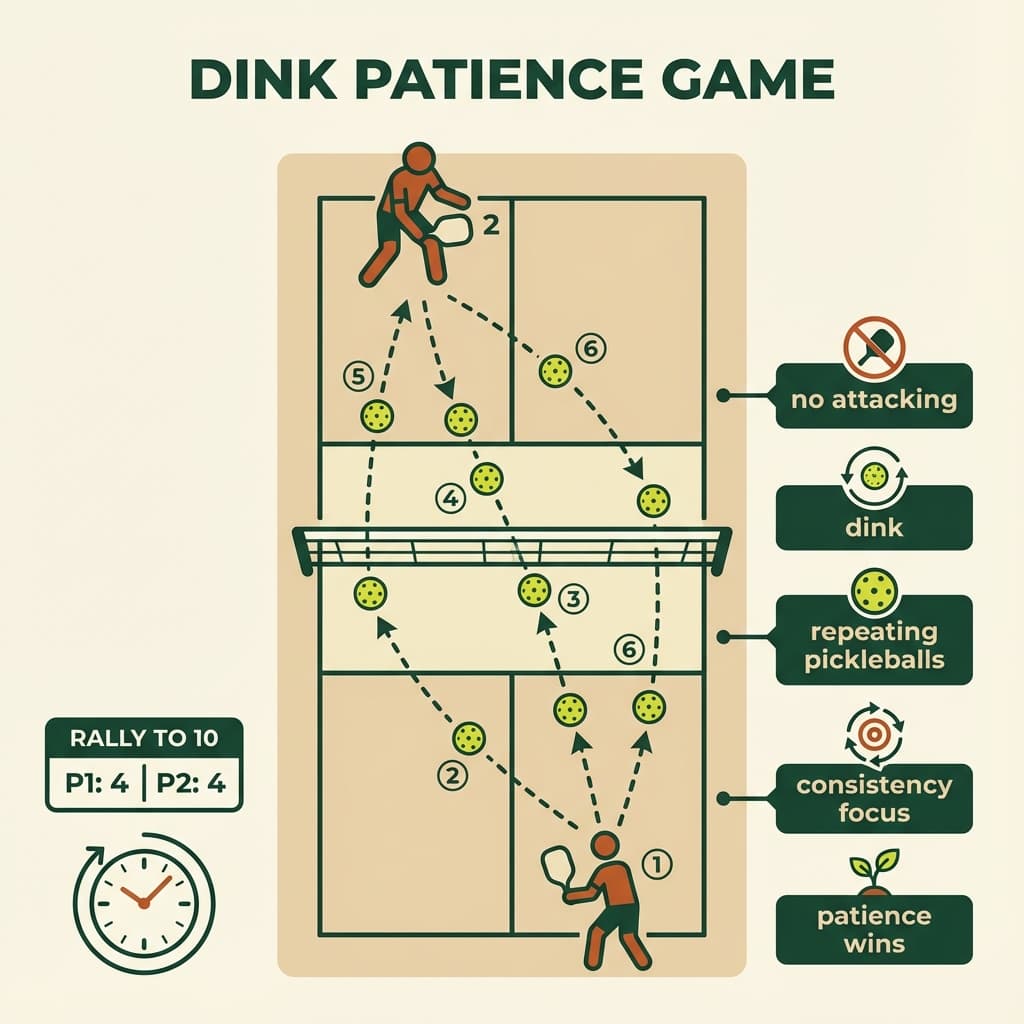
Dink Down-the-Line & Speed Up
Dink straight ahead and speed up on sitters. Play it out to train when to stay soft and when to attack.
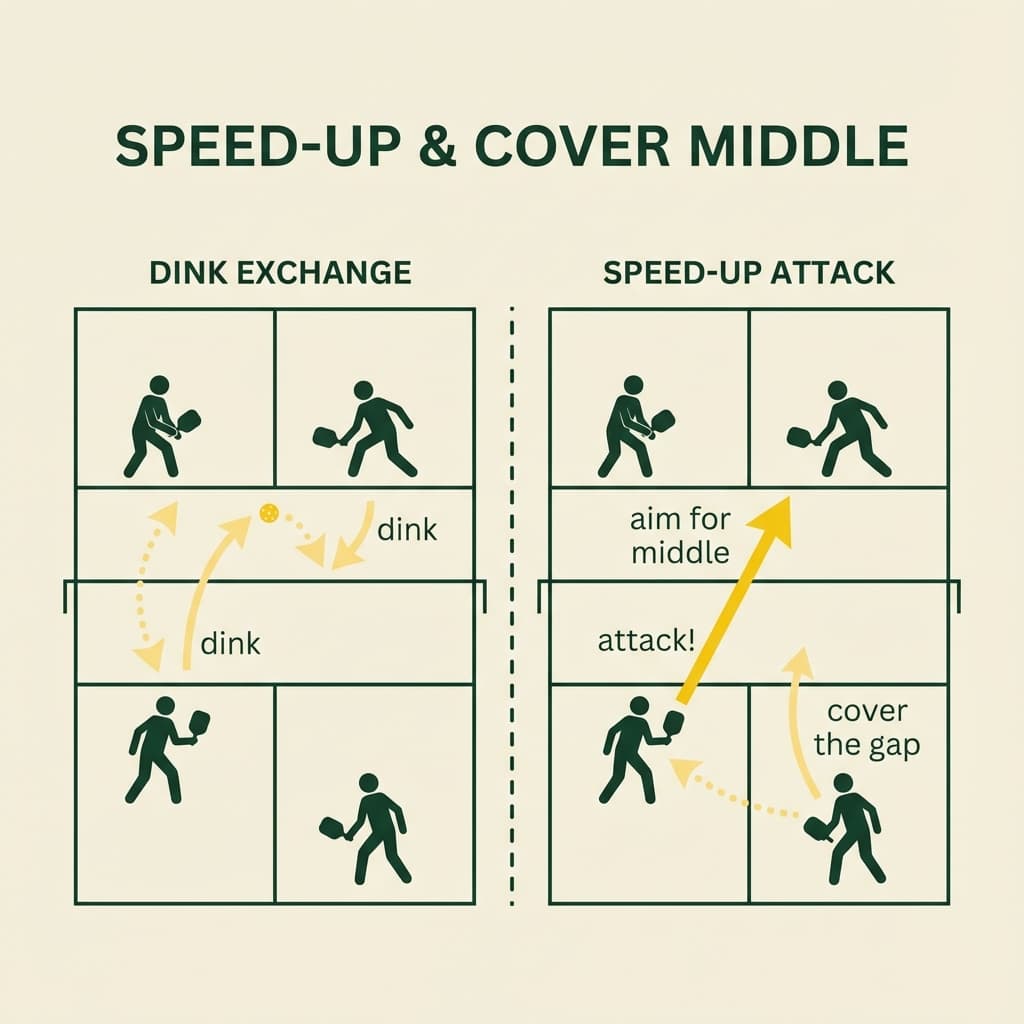
Crosscourt Speed-Ups & Middle Cover
Start with a crosscourt dink. After the return, close middle and be ready for a speed-up. Keep paddle high and defend out front.
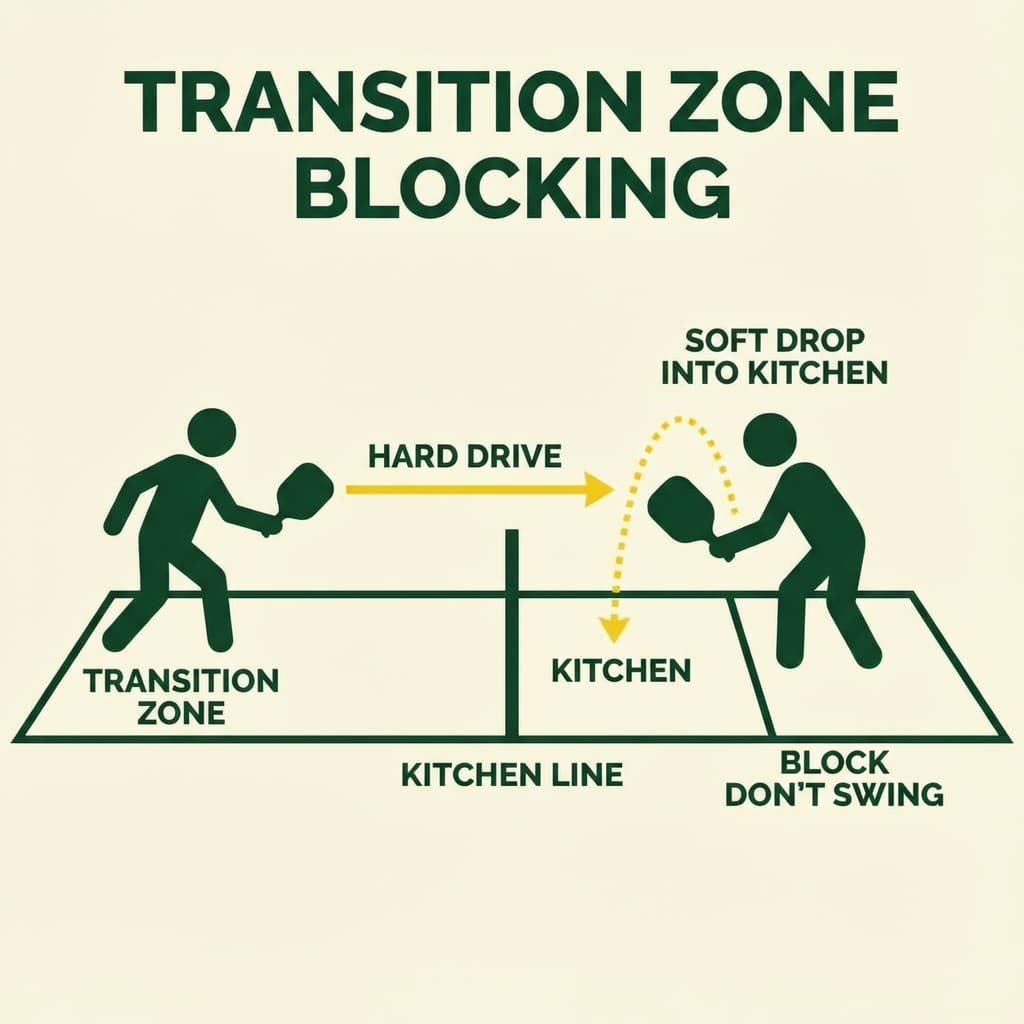
Transition Zone Resets
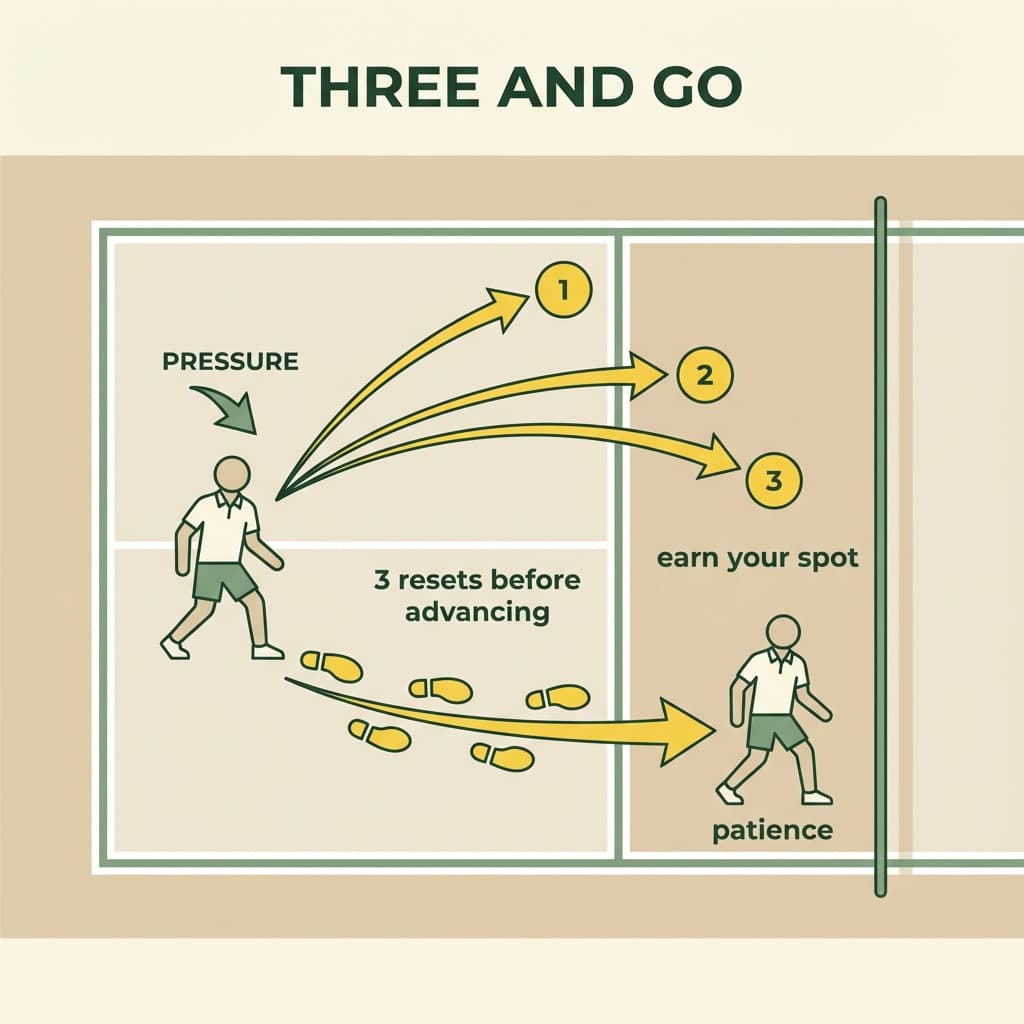
Absorb fourth-shot speed-ups from mid-court and reset softly into the kitchen. After three good resets, advance to the NVZ.
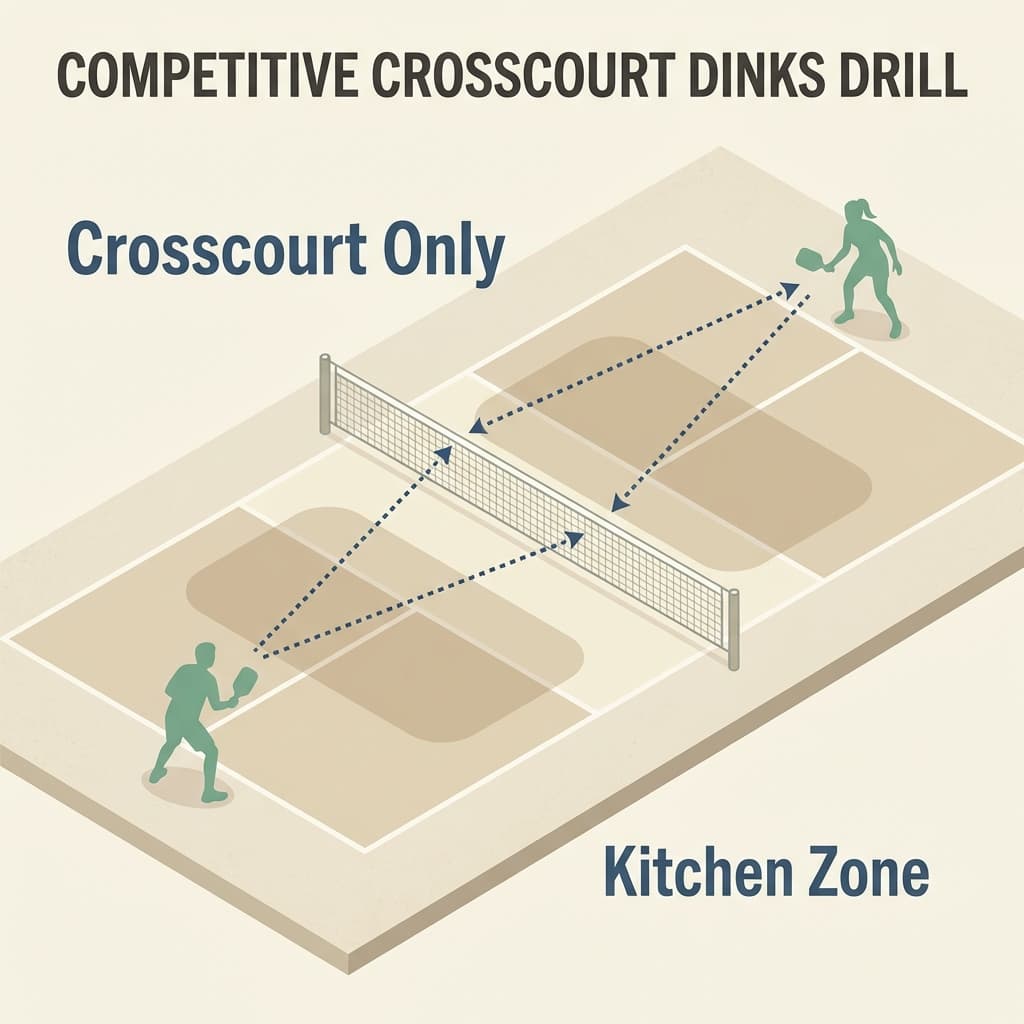
Competitive Crosscourt Dinks
Play to 5 with crosscourt-only dinks. No speed-ups. Miss in net = lose all points. Train width coverage with cross steps.
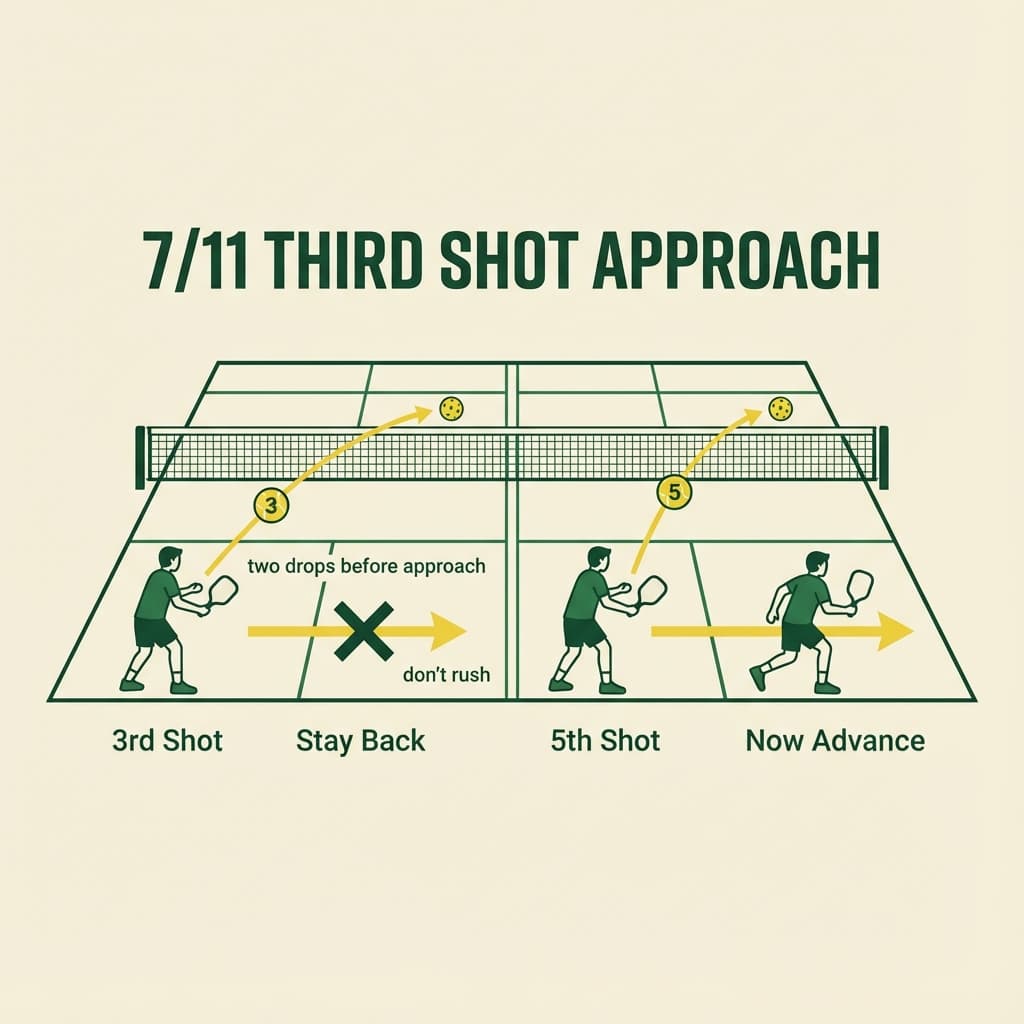
7/11 Third Shot Variations
Third-shot drop or drive, but require a second controlled ball before closing. Attack when it sits up—don't over-reset.
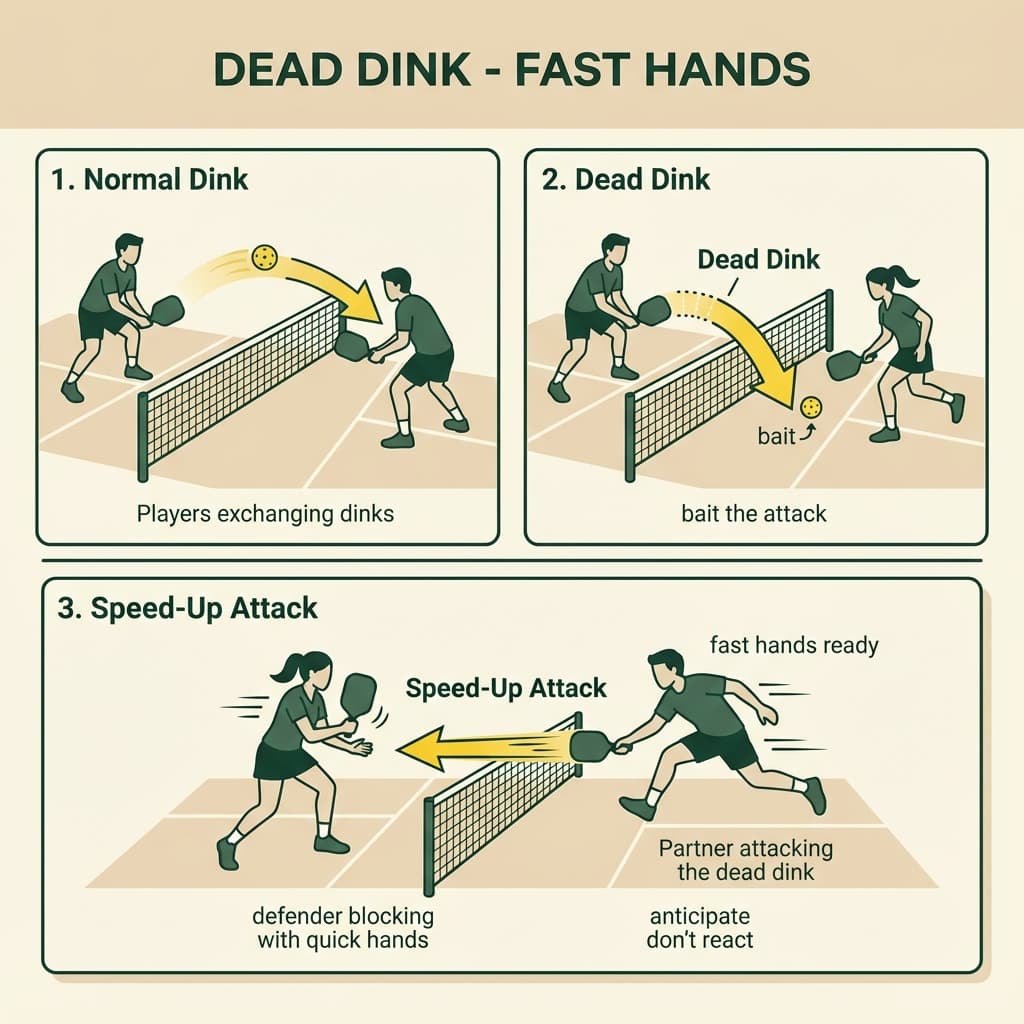
Dead Dink Defense
Feed a soft dead dink and expect an attack. Practice soft blocking and quick reload hands at the kitchen.
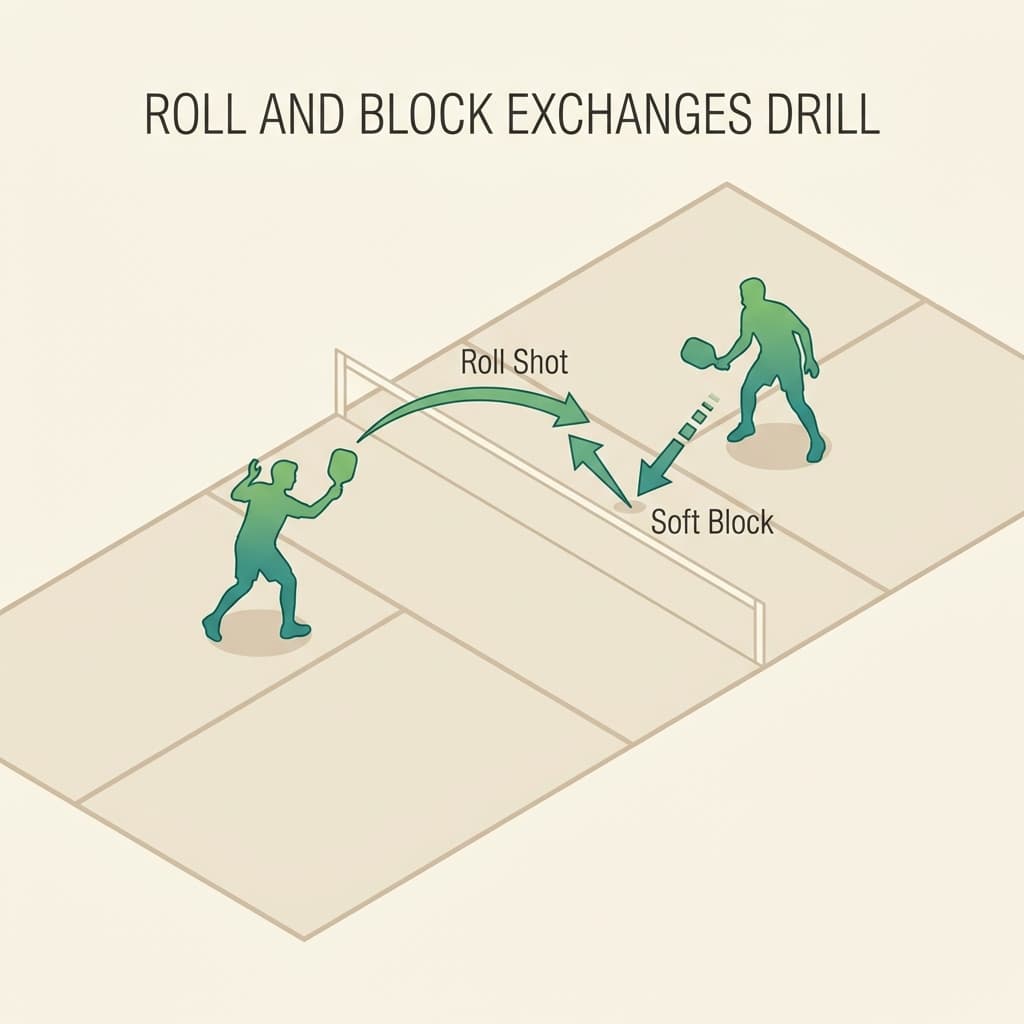
Roll & Block Exchanges
Alternate topspin rolls and soft blocks at the NVZ. Change paddle angle without big backswings.
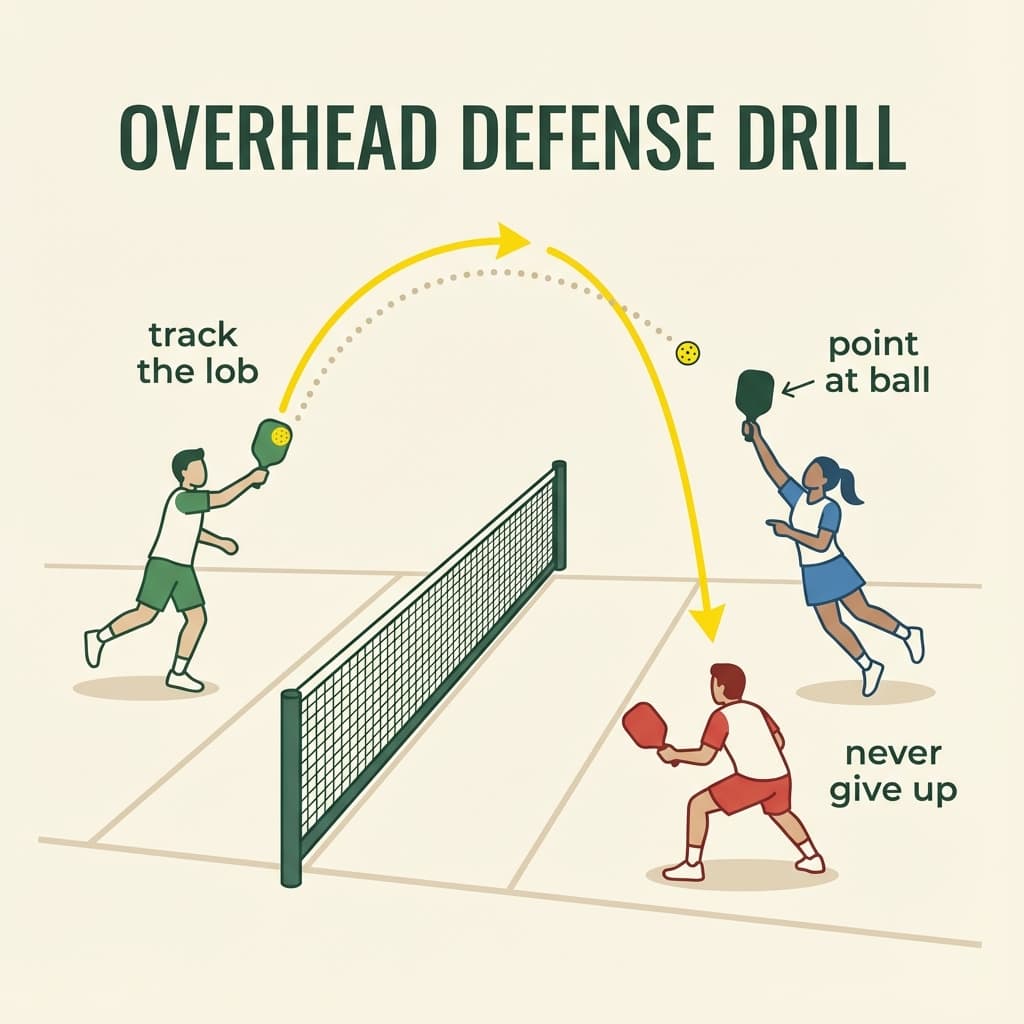
Lob Defense & Recovery
Practice defending against lobs and recovering back to the kitchen line. Essential for maintaining net position.
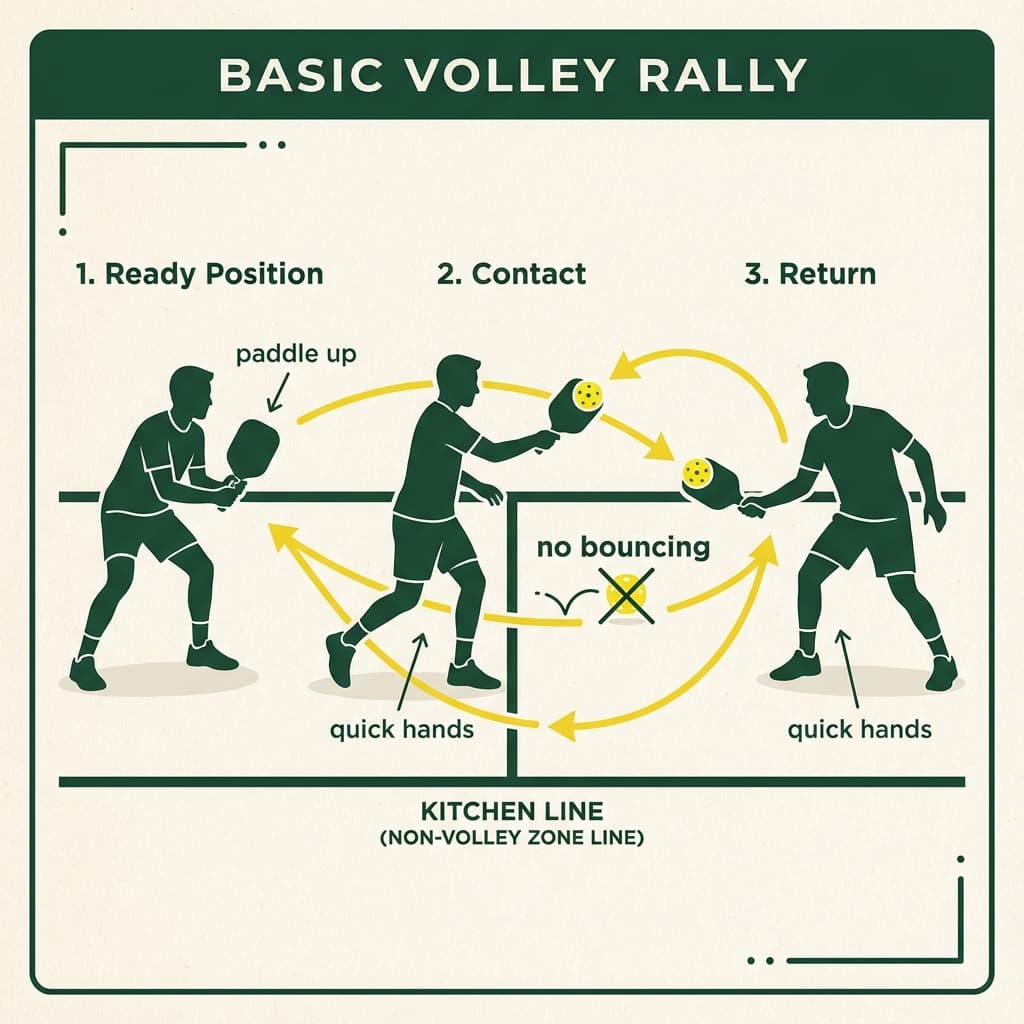
Volley-to-Volley Battles
Fast-paced volley exchanges at the kitchen line. Build reflexes, hand speed, and net presence under pressure.
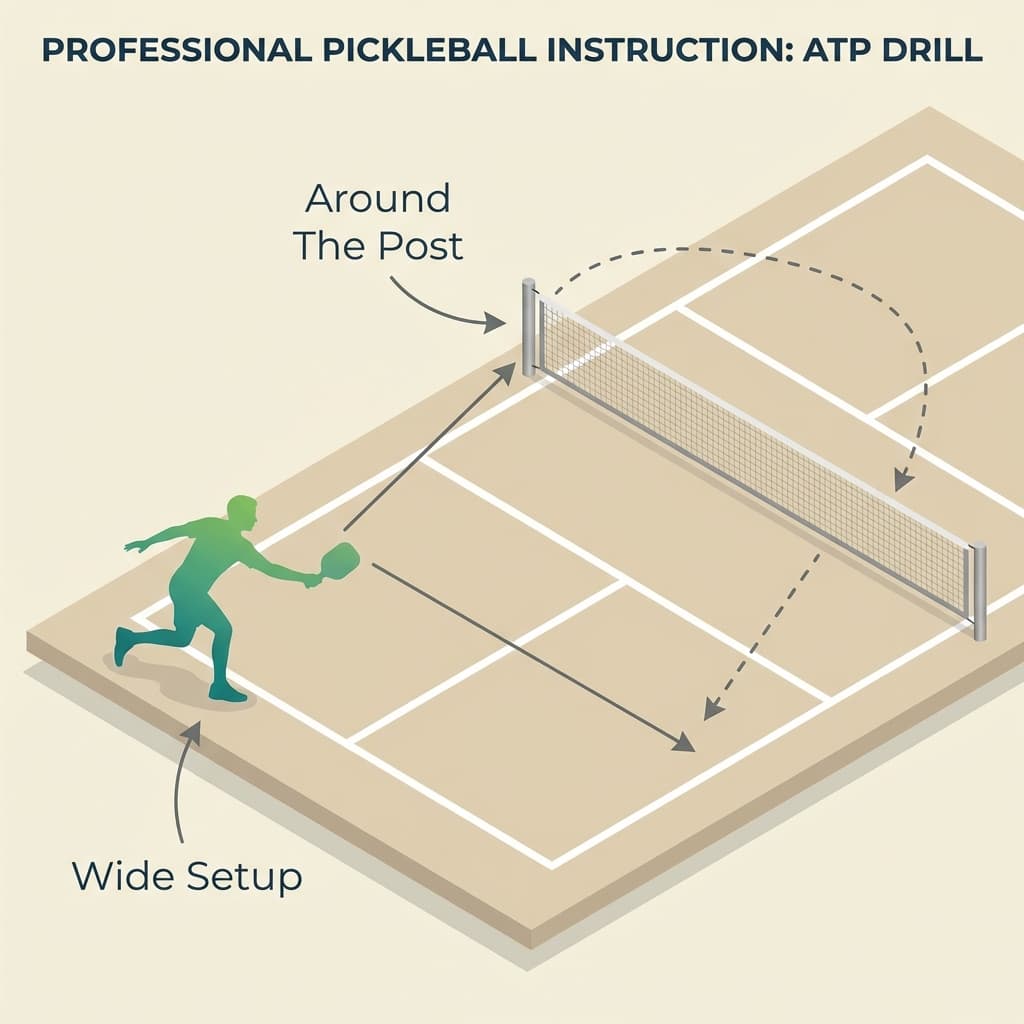
ATP (Around The Post) Setup
Learn to recognize and execute the ATP shot. Practice the setup, footwork, and execution of this advanced shot.
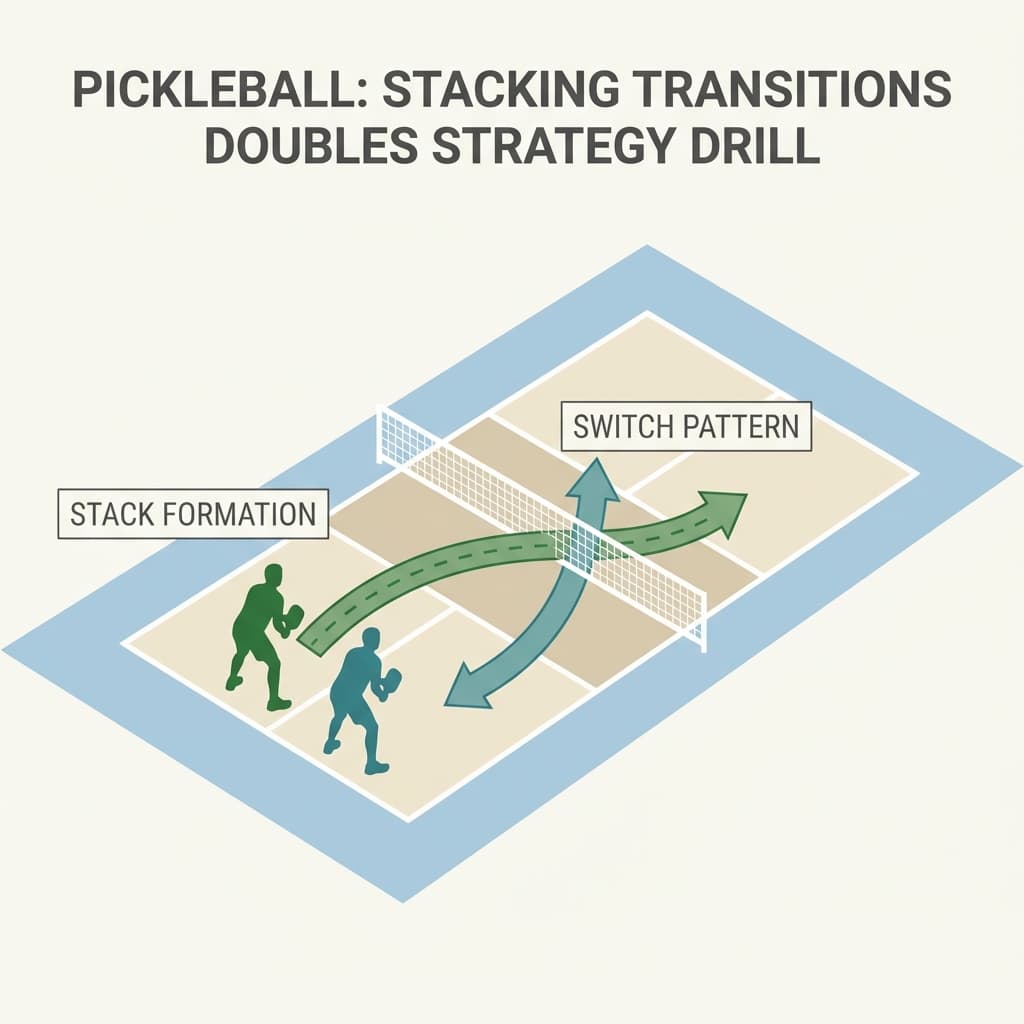
Stacking Transitions
Master stacking strategy with smooth transitions and court coverage. Practice switching sides while maintaining offensive position.
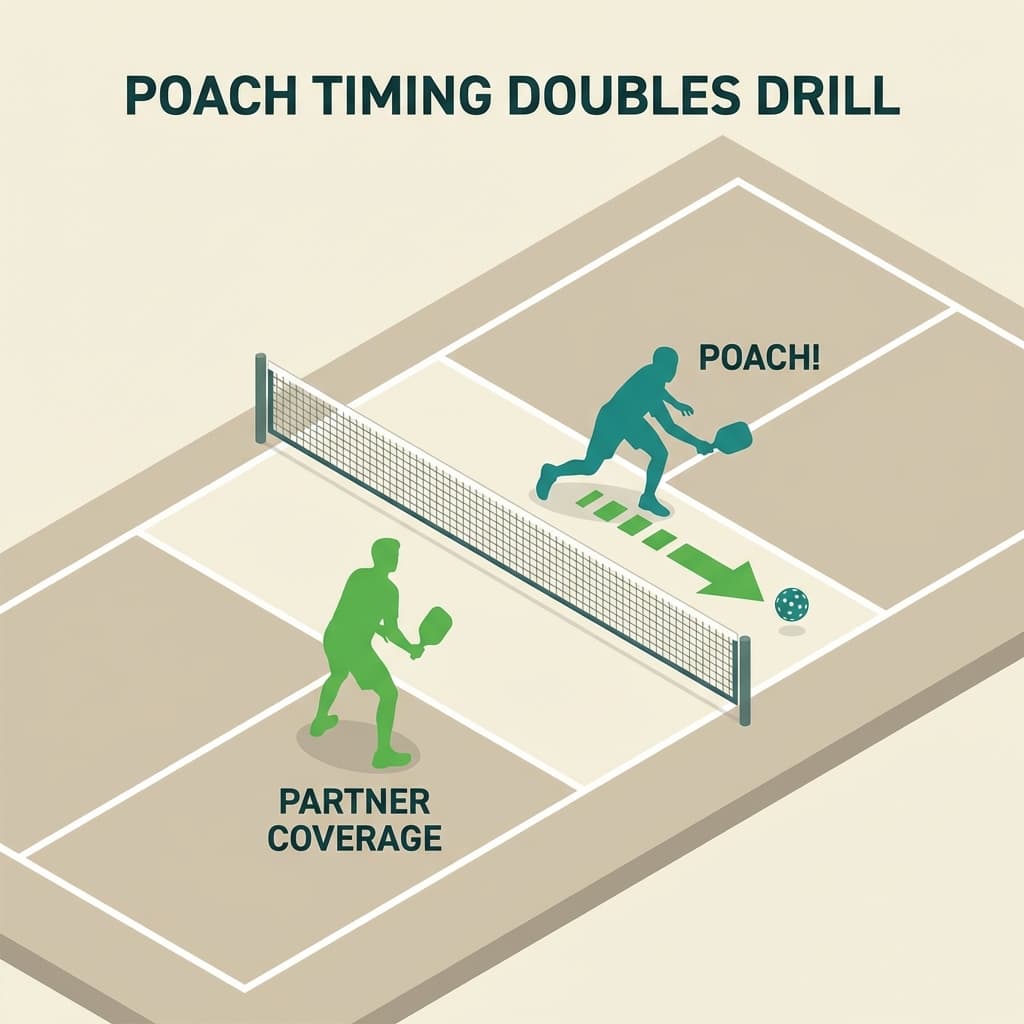
Poach Timing & Communication
Develop poaching instincts and partner communication. Learn when to poach and how to signal your partner.
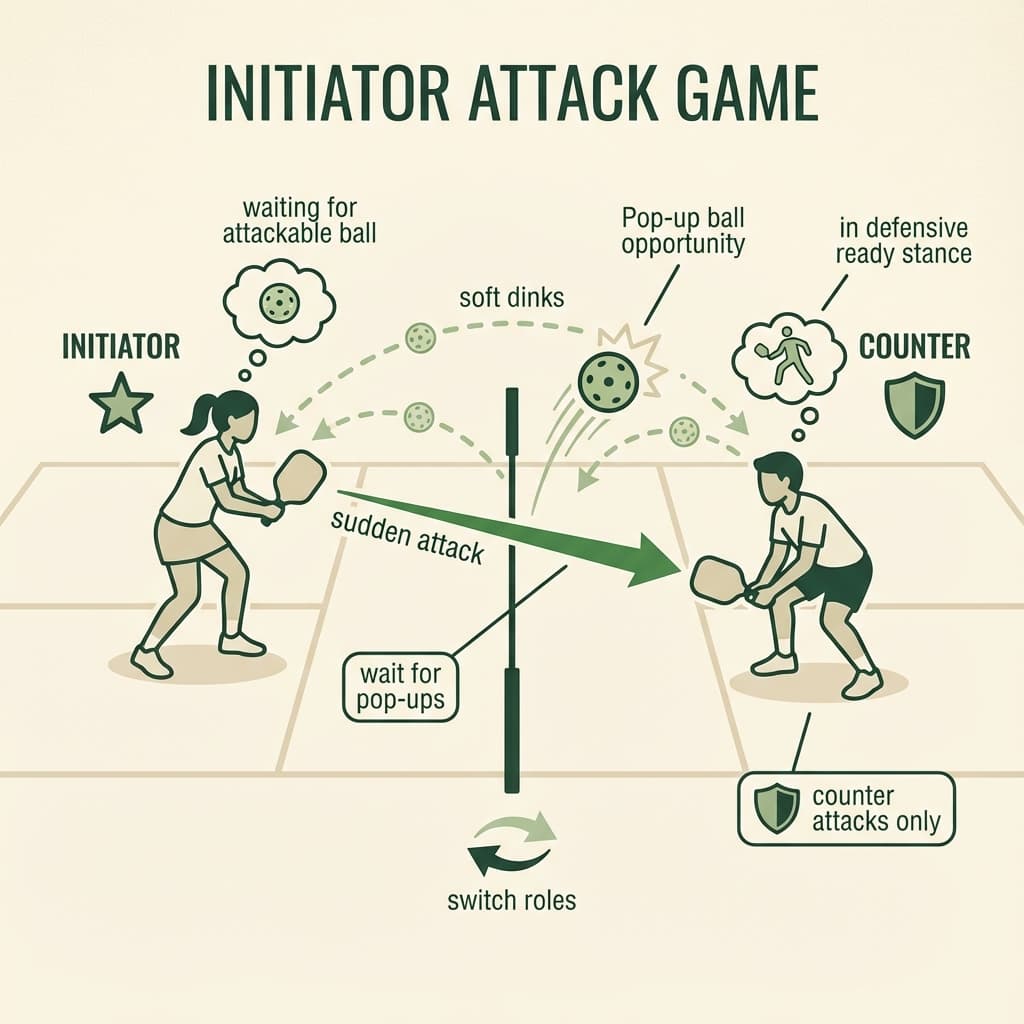
Speed-Up Patterns vs. Counter
Script speed-up patterns (shoulder, hip, chicken-wing) and train immediate counters with compact swings.
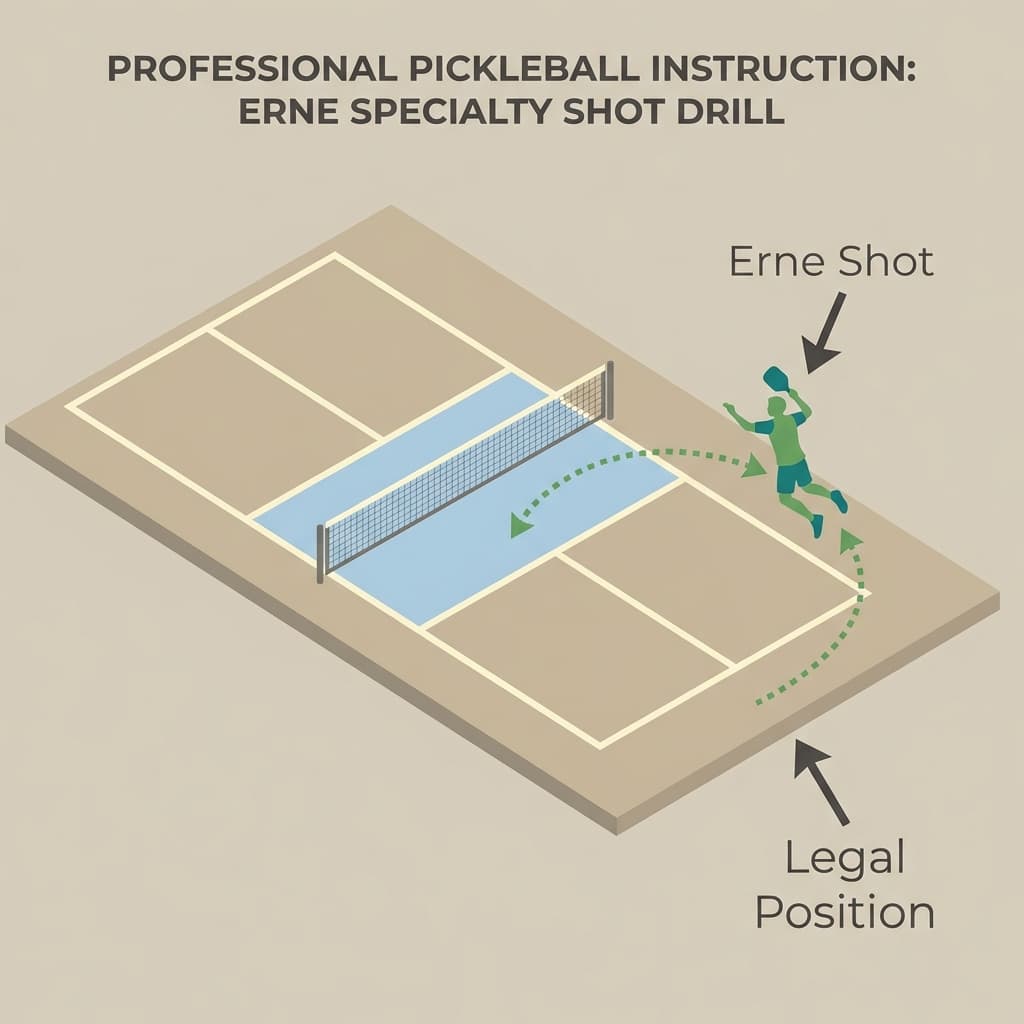
Erne Footwork & Timing
Set up crosscourt dinks, jump the corner for Ernes with legal positioning. Reset back to neutral after each rep.
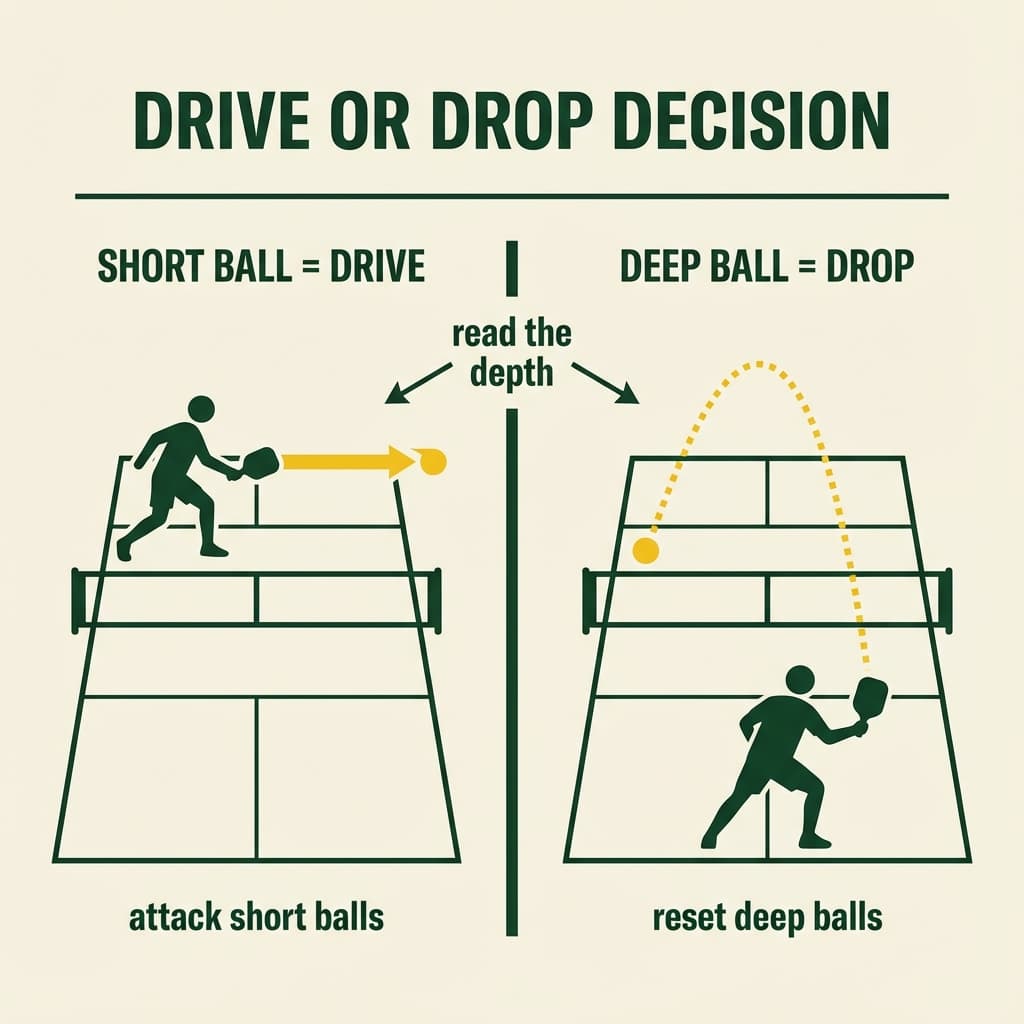
Drive-Then-Drop Mix
Alternate third-shot drives and drops on command. Read opponent position to choose the right ball; track success rate.
Two-Ball Transition Chaos
Coach feeds random deep/short balls in transition. Decide to reset, roll, or lob. Goal: win neutral quickly without errors.
How to get the most out of these drills
Playing games alone rarely fixes a weak dink or an inconsistent third shot drop. Drills isolate one skill, give you dozens of reps in a few minutes, and let you measure progress. Each drill on this page is written the way a coach would run it: a warmup step, a target or pattern to hit, a way to add pressure, and a rep count so you know when you are done.
- Pick one focus per session. Dinking, serves, footwork, transition, or defense. Twenty minutes on one skill beats an hour of everything.
- Count your makes. Aim for 60 to 70 percent before you move to the next step or the next level.
- Pair drills with a plan. Our beginner drills guide includes a 4-week practice schedule, and the dinking guide explains the technique behind the reps.
- Find a court and a partner. Use the pickleball court finder to locate courts near you and open play sessions to practice with players at your level.
Pickleball drills FAQ
What are the best pickleball drills for beginners?+
Start with dinking drills at the kitchen line, a serve consistency drill, and a wall rally drill for paddle control. Those three build the touch, depth, and hand-eye coordination that every other shot depends on. Each beginner drill on this page takes 10 to 15 minutes.
How often should I do pickleball drills?+
Two or three focused sessions of 20 to 30 minutes per week improves faster than only playing games. Pick one or two drills per session, track your makes, and move up a level once you hit 70 percent consistency.
Can I practice pickleball drills alone?+
Yes. Wall rallies, serve target practice, shadow footwork, and drop feeds against a wall or ball machine all work solo. Partner drills such as crosscourt dinks and third shot drop exchanges need one other player.
What should I drill to move from 3.0 to 3.5 or 4.0?+
Most 3.0 players lose points in the transition zone and on the third shot. Prioritize third shot drop drills, transition zone resets, and dink patience drills, then add speed-up and counter drills at the intermediate level.
Are these drills free?+
Every drill here is free with full step-by-step instructions, timing, and reps. The DinkAI iPhone app adds guided timers, progress tracking, and AI video feedback on your technique.
Track your drill progress
The DinkAI app runs every drill with guided timers, logs your reps over time, and gives AI feedback on your technique from a phone video.