
Stacking in Doubles Pickleball: The Strategy That Wins Games
Learn why pro teams stack, when to use this advanced formation, and how to execute it without confusing your partner.

The DinkAI Team
Published
📖 In This Article
Learn why pro teams stack, when to use this advanced formation, and how to execute it without confusing your partner.
What Is Stacking?
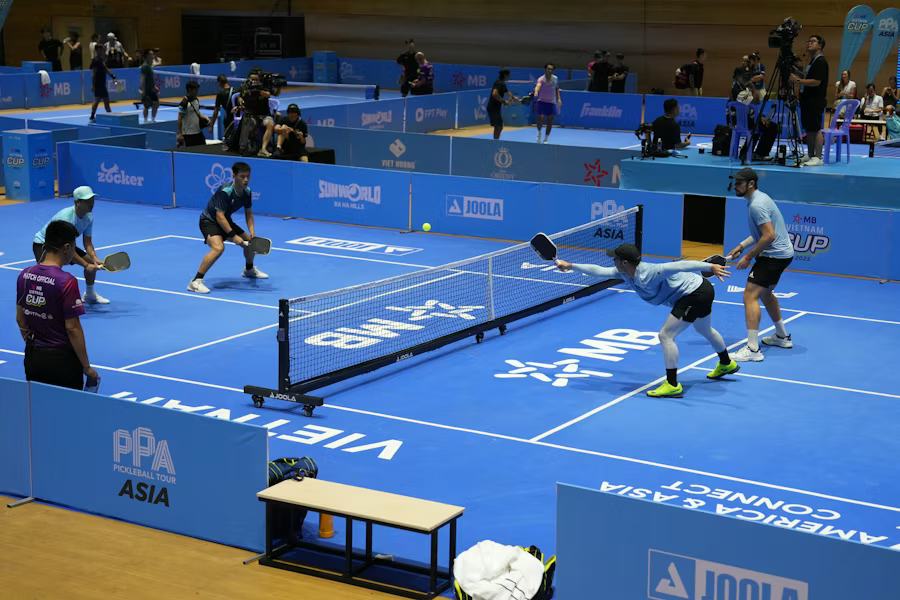
Stacking is an advanced doubles strategy where both partners line up on the same side of the court during the serve or return—then quickly shift to their preferred positions after the ball is in play.
Watch any pro match, and you'll see stacking constantly. It's not just showing off—it's a legitimate tactical advantage.
Why Stack?
1. Keep Forehands in the Middle
Most players have a stronger forehand. Stacking lets you position so both players' forehands cover the crucial middle of the court.
2. Hide Weaknesses
If one player has a weaker backhand, stacking keeps that side protected.
3. Create Angles
Certain players hit better cross-court or down-the-line shots from specific positions. Stacking puts them where they're most dangerous.
4. Confuse Opponents
Teams that don't stack are predictable. Stacking forces opponents to adjust constantly.
Mixed handedness: One of you has your forehand in the middle regardless—but you may still stack for angle preferences.
When to Stack (Serving Team)
On your serve, you control who serves from which side. Here's the setup:
Scenario: Right-Handed Team, Right Partner is Serving
Traditional (No Stack):- Server on right side, partner on left
- Both backhands end up in the middle—weak!
- 1Server serves from the right side (as required by score)
- 2Partner stands behind the server or outside the court
- 3After the serve, partner quickly slides to the right side
- 4Server moves to the left side
- 5Now both forehands are in the middle!
When to Stack (Returning Team)
You can also stack on the return:
- 1Both players start on one side
- 2Receiver returns the ball
- 3Both players shift to their preferred sides as they move to the kitchen
This works best when your team has clearly defined "I like the left side" preferences.
Common Stacking Formations
| Formation | Description | Best For |
|---|---|---|
| Full Stack | Both players switch sides every point | Strong forehand players |
| Half Stack | Stack only when serving/returning from one side | Mixed skill levels |
| Partial Stack | Stack only at specific scores | Situational advantage |
The Communication Challenge
Stacking fails when partners don't communicate. Before the point:
- 1Agree on who goes where
- 2Use hand signals (behind the back) to confirm
- 3Call out "stacking" or "regular" before serving
Common Hand Signals
- Fist: I'm staying (no stack)
- Open palm: I'm switching (stack)
- Finger point: You go there
Step-by-Step Execution
Serving Team Stack
- 1Pre-serve: Non-server stands near the centerline or outside the sideline
- 2Serve: Server hits the ball
- 3Move: As the third shot is being hit, both players shift to target positions
- 4Settle: Arrive at the kitchen line in preferred positions
Returning Team Stack
- 1Pre-return: Both players on same side, receiver ready
- 2Return: Receiver hits deep return
- 3Move: Both advance toward kitchen, crossing if needed
- 4Settle: Arrive in preferred positions
When NOT to Stack
Stacking isn't always the answer:
- Recreational games: Can annoy partners who don't understand it
- Mismatched skill levels: If one player can't move quickly
- Against lobbers: You need to cover the baseline, not switch positions
- When tired: Sloppy stacking creates confusion and errors
Drills to Master Stacking
Drill 1: Shadow Stack (No Ball)
Practice the movement pattern with your partner for 5 minutes. Call out "serve!" and both shift. Repeat until natural.
Drill 2: Serve and Stack
Server hits, then both players execute the stack. Focus on arriving at the kitchen together.
Drill 3: Game Situations
Play actual points but ALWAYS stack. Accept that you'll make mistakes—repetition builds muscle memory.
Coach Mike's Take
Stacking separates 4.0+ players from everyone else. It's not complicated once you practice it, but it feels awkward at first.
My advice: Pick one formation and master it. Don't try to stack every point with seven variations. Start simple:
- 1Decide who prefers which side
- 2Stack only when serving from your "wrong" side
- 3Expand from there as you get comfortable
The teams that move as a coordinated unit—not two individuals—win tournaments. Stacking is how you become that unit.
Film a shot. Get one clear fix.
DinkAI measures your swing on your iPhone, tells you the one thing to fix first, and gives you the drill that fixes it. Free to try.
Related Topics

The DinkAI Team
DinkAI builds an AI pickleball coach for iPhone: film one shot, get a measured form score, one fix and the drill for it. The guides here come from the same coaching material that powers the app’s eight training programs.
Related Articles
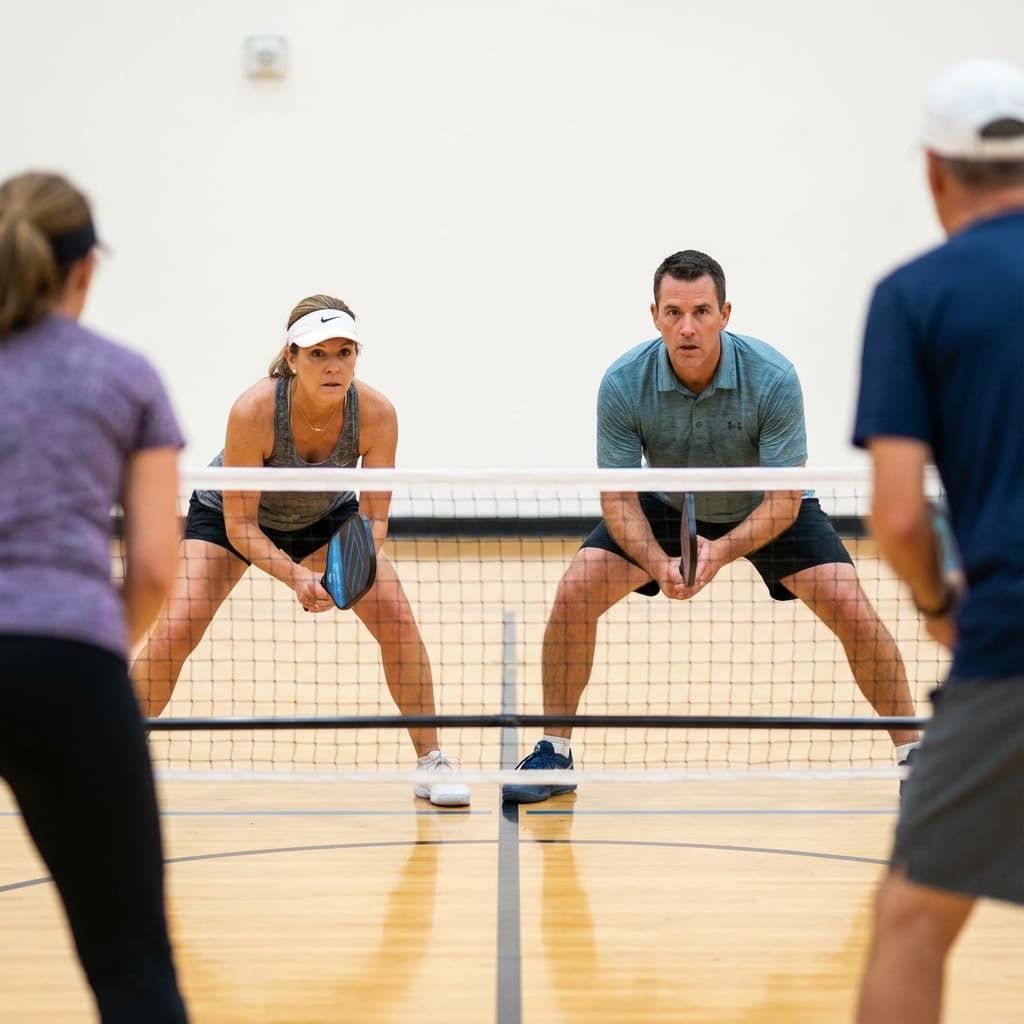
Master the Kitchen Line: Your Complete Defense Guide
Learn how to dominate at the non-volley zone with proper positioning, soft hands, and defensive strategies that will frustrate your opponents.
Read →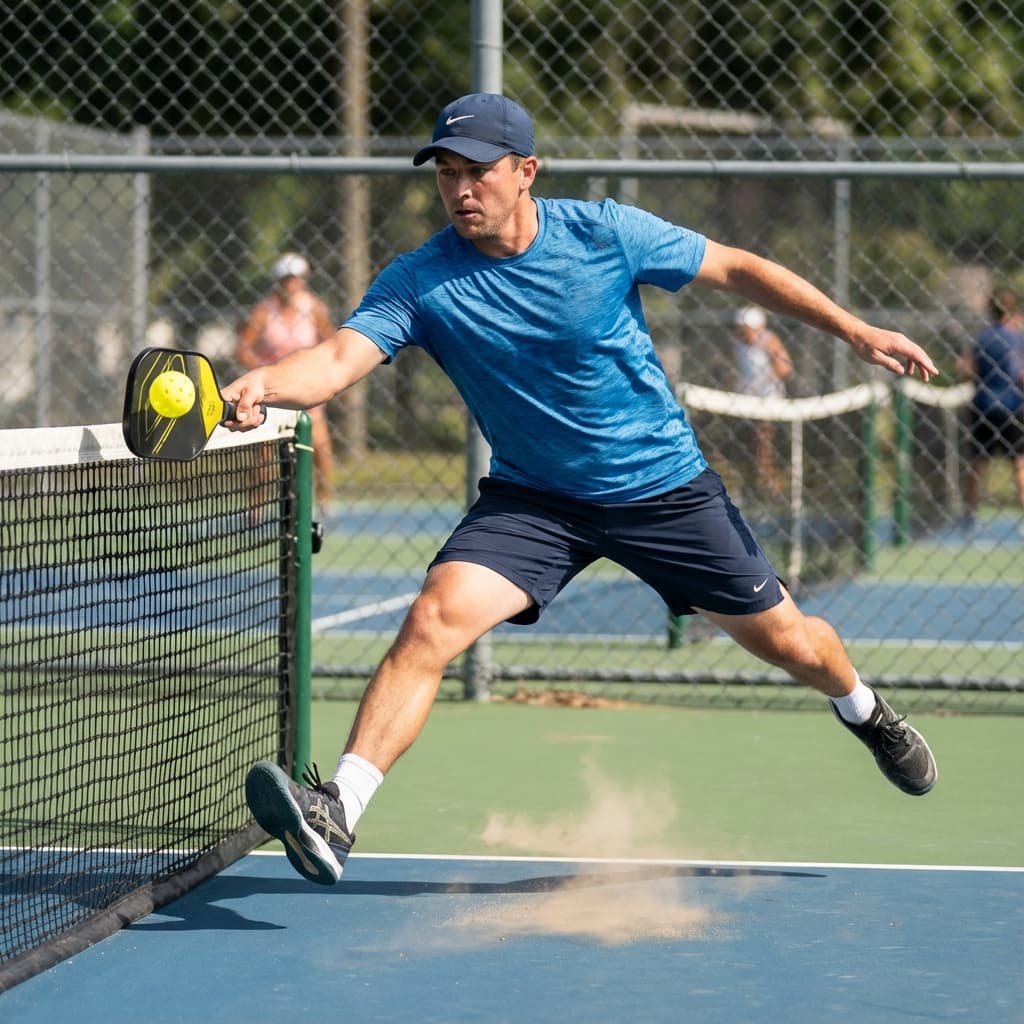
The Flashy Stuff: How and When to Hit an Erne or ATP
They are the highlight-reel shots of pickleball. Learn the mechanics, the rules, and—most importantly—when to actually attempt an Erne or ATP.
Read →
The 10-Second Reset: How to Stop the Bleeding
Pickleball is a game of momentum. When you lose 5 points in a row, it’s not your paddle’s fault. It’s your brain. Here is how to fix it.
Read →