
Master the Kitchen Line: Your Complete Defense Guide
Learn how to dominate at the non-volley zone with proper positioning, soft hands, and defensive strategies that will frustrate your opponents.

The DinkAI Team
Published
📖 In This Article
Learn how to dominate at the non-volley zone with proper positioning, soft hands, and defensive strategies that will frustrate your opponents.
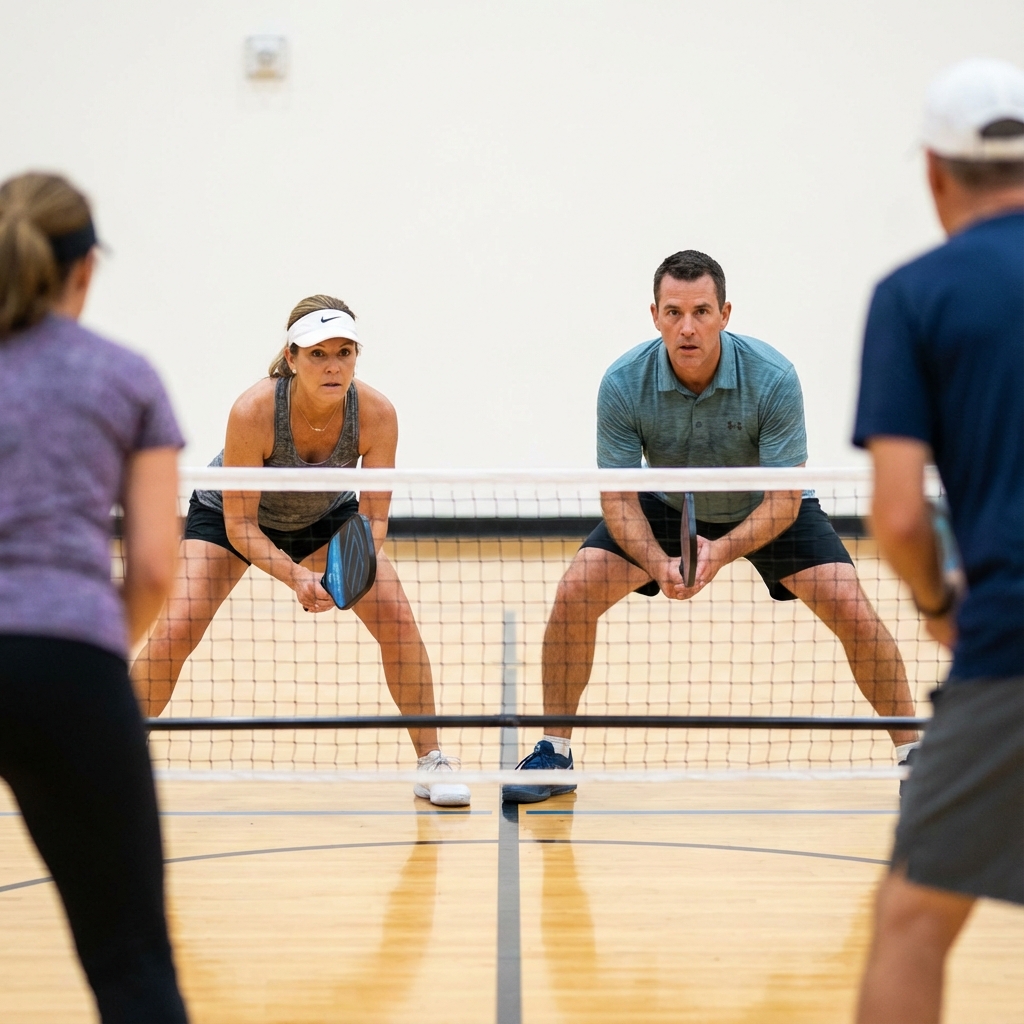
Why the Kitchen Line Wins Games
Here's a truth that took me years to learn: the team that controls the kitchen line controls the game. Period.
I've watched countless 3.0 players who can smash the ball but lose consistently to 4.0+ players who barely hit hard. The difference? Kitchen line mastery.
The Foundation: Your Ready Position
Before we talk strategy, let's nail your stance:
- Feet shoulder-width apart — athletic and balanced
- Knees slightly bent — ready to move in any direction
- Paddle up at chest height — not down by your waist
- Weight on the balls of your feet — never flat-footed
The Art of Soft Hands
The biggest mistake I see? Players muscling the ball at the kitchen line.
Soft hands = control. When dinking:- 1Absorb the ball — don't punch at it
- 2Use your shoulder and wrist — minimal backswing
- 3Keep the paddle face open — let gravity do the work
- 4Aim for consistency — 7 out of 10 dinks should land in the same spot
| Common Mistake | Fix |
|---|---|
| Hitting too hard | Pretend you're catching an egg |
| Paddle too low | Reset to chest height after every shot |
| Flat feet | Small "split step" before each return |
| Looking at your paddle | Watch the ball contact your paddle |
Defensive Positioning Strategies
1. The Wall Formation (Doubles)
You and your partner form an impenetrable wall at the kitchen line. Stay within 6 feet of each other—no wider. This eliminates the gap between you.
2. The Reset Shot
When you're pushed back, don't try to win the point. Instead:
- Take pace off the ball
- Arc it high enough to clear the net
- Land it in your opponent's kitchen
- Use this time to advance back to the line
3. Block Volleys
Against hard shots at your body:
- Keep your paddle firm but not death-grip tight
- Simply redirect—don't swing
- Aim for the opponent's feet
Reading Your Opponent
Great defenders anticipate. Watch for these tells:
- Big backswing → They're going for power. Prepare to block.
- Open paddle face → They're dinking cross-court.
- Squared shoulders → Ball is coming down the line.
- Looking at your feet → They're attacking low.
Coach Mike's 3-Point Defensive Drill
Practice this sequence for 10 minutes before every session:
- 1Dink 20 balls cross-court (focus on consistency)
- 2Block 10 hard shots at your body (partner feeds)
- 3Reset 10 balls from mid-court back to the kitchen
If you can't complete this cleanly, you're not ready for competitive play. The kitchen line is where games are won or lost—invest the time.
Film a shot. Get one clear fix.
DinkAI measures your swing on your iPhone, tells you the one thing to fix first, and gives you the drill that fixes it. Free to try.
Related Topics

The DinkAI Team
DinkAI builds an AI pickleball coach for iPhone: film one shot, get a measured form score, one fix and the drill for it. The guides here come from the same coaching material that powers the app’s eight training programs.
Related Articles
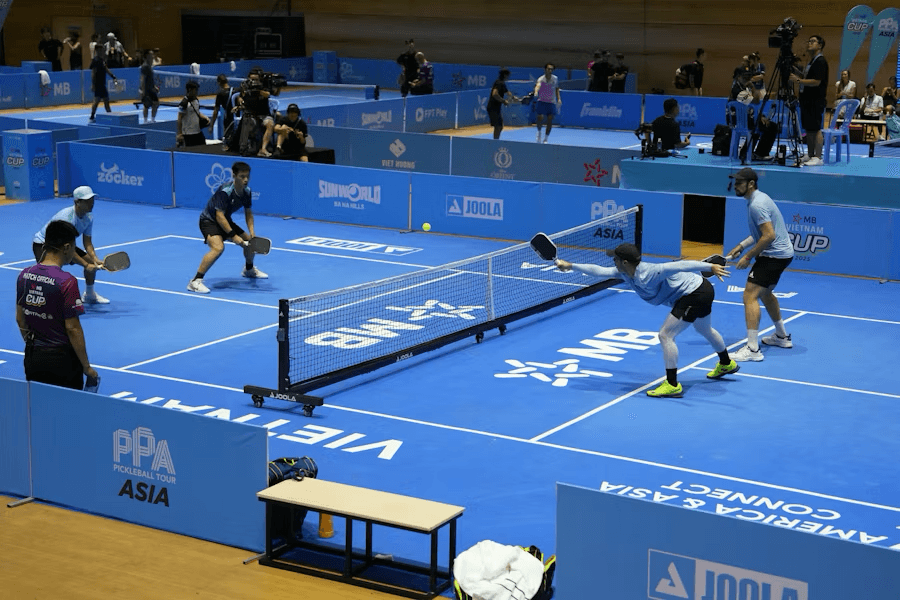
Stacking in Doubles Pickleball: The Strategy That Wins Games
Learn why pro teams stack, when to use this advanced formation, and how to execute it without confusing your partner.
Read →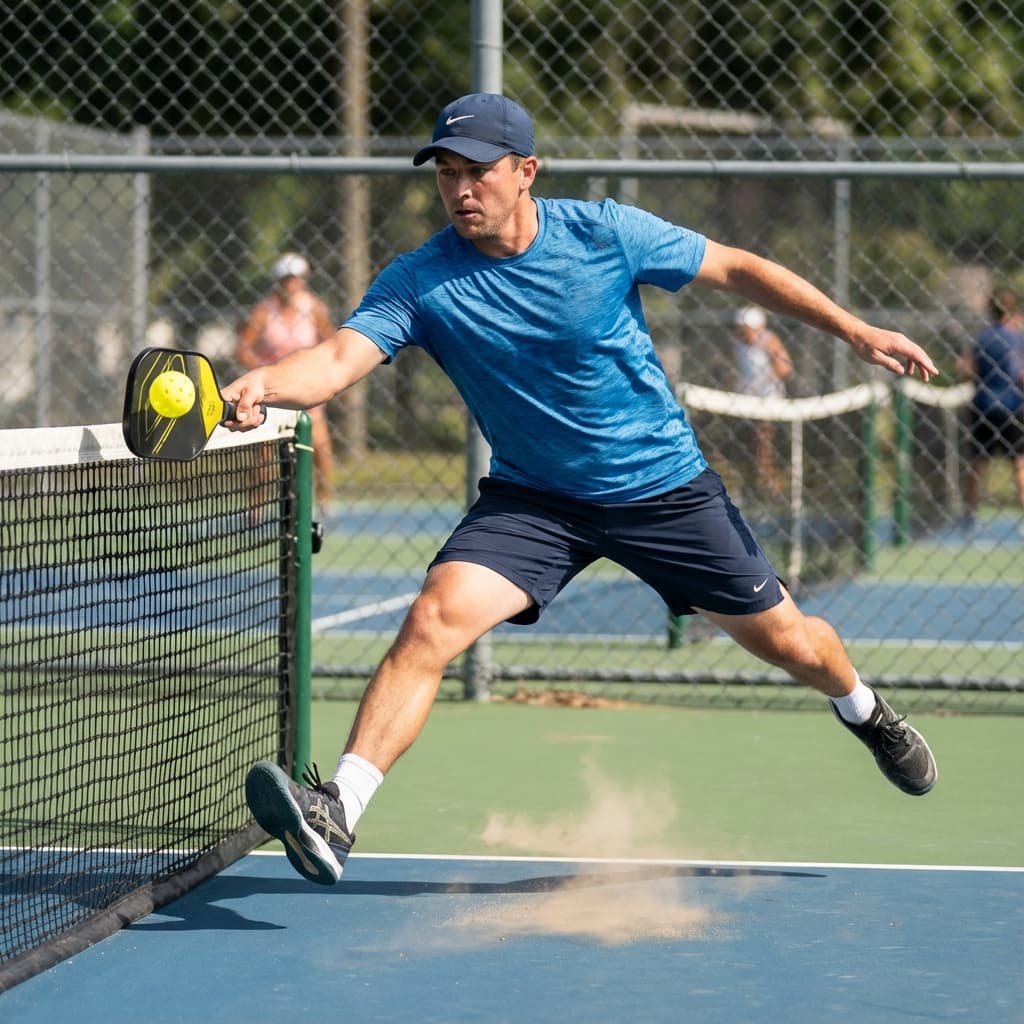
The Flashy Stuff: How and When to Hit an Erne or ATP
They are the highlight-reel shots of pickleball. Learn the mechanics, the rules, and—most importantly—when to actually attempt an Erne or ATP.
Read →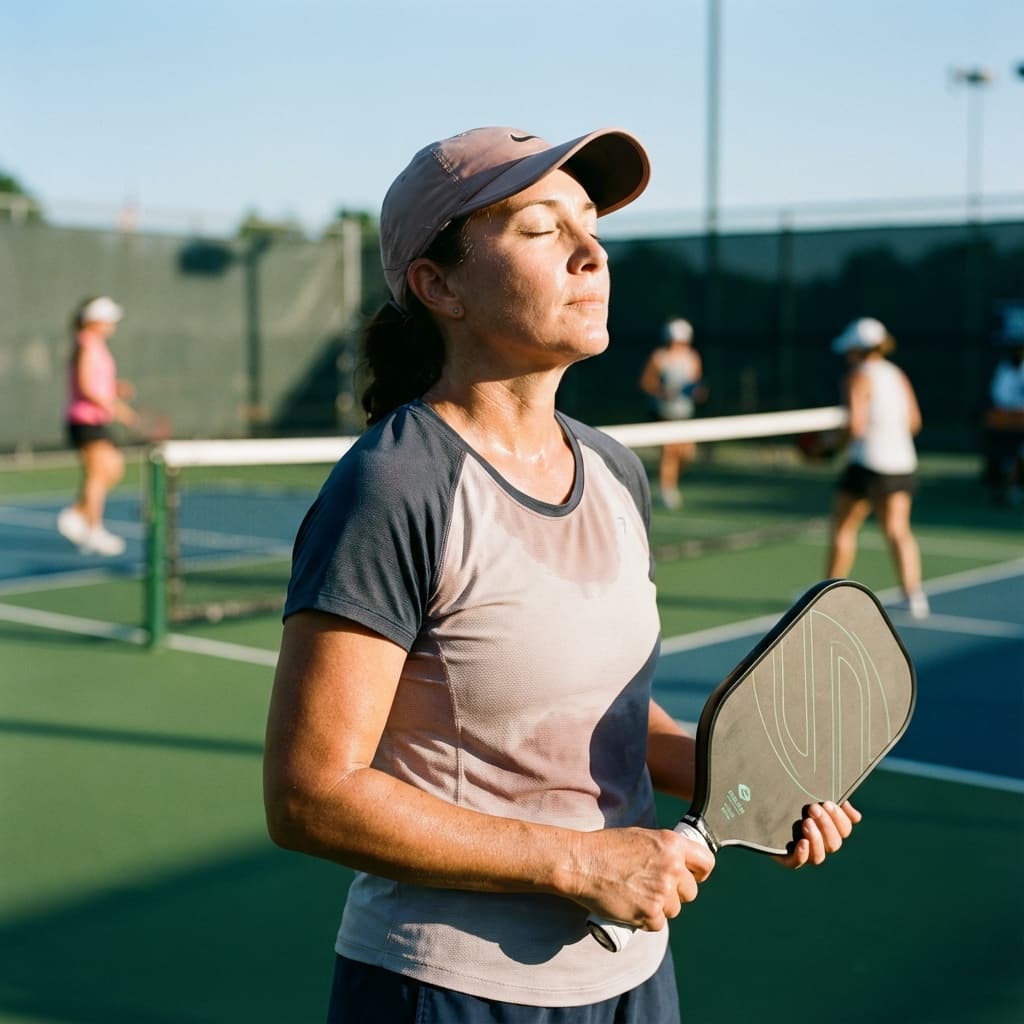
The 10-Second Reset: How to Stop the Bleeding
Pickleball is a game of momentum. When you lose 5 points in a row, it’s not your paddle’s fault. It’s your brain. Here is how to fix it.
Read →